Why GEO Best Practices 2025 Are Critical for Your Business Survival
GEO best practices 2025 are reshaping how businesses are found online. The age of AI answers is here, and the stakes are high. Gartner predicts organic search traffic could plummet by 50% or more by 2028 due to AI-powered searches. Traditional SEO aimed for a click on page one; Generative Engine Optimization (GEO) aims to get your content directly into the AI's answer. When ChatGPT, Gemini, or Perplexity answers a question, your brand must be the cited source.
This is about survival. The search bar is no longer a list of links but a generator of single, synthesized responses. If you're not the source, you're invisible. Here's what you need to know:
Core GEO Best Practices for 2025:
- Structure Content for AI Comprehension - Use Q&A formats, clear headings, and concise answers.
- Implement Entity-Based Optimization - Use schema markup and structured data to help AI engines understand your content.
- Build Citation Authority - Focus on being quoted by AI engines, not just ranking in search results.
- Prioritize E-E-A-T Signals - Demonstrate Experience, Expertise, Authoritativeness, and Trustworthiness.
- Optimize for Conversational Queries - Target natural language keywords that match how people talk to AI.
- Automate Your Local SEO - Use AI-powered tools to manage Google Business Profile optimization at scale.
I'm Justin Silverman, founder of Merchynt. I've spent five years building AI marketing tools for over 10,000 small businesses. In 2024, I launched Paige, the world's first fully automated local SEO AI platform, designed to implement these GEO best practices at scale so businesses don't fall behind.
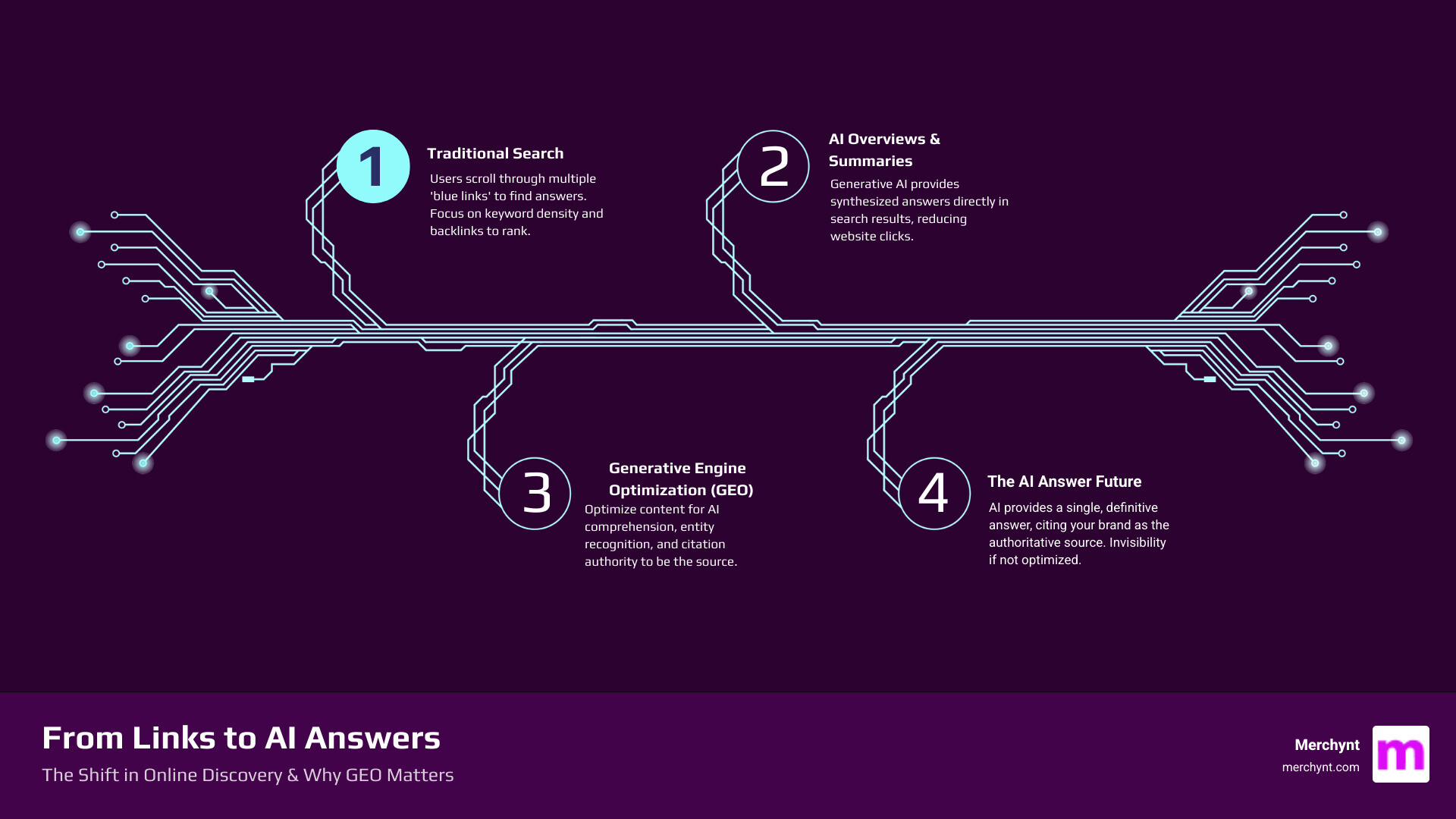
The Seismic Shift: Why Generative AI Demands a New Optimization Strategy
The ground is shifting. For years, the SEO playbook was simple: climb Google's search results. But in 2025, that model is crumbling. We're in the "zero-click future"—where AI answers questions directly, and website visits are optional.
The numbers are stark. By 2025, experts project 60% of all searches will be zero-click. Gartner predicts a potential 50% drop in organic traffic by 2028, and that 40% of B2B queries will be satisfied inside an answer engine by 2026. When Google rolled out AI Overviews, some sites saw traffic plummet by 18% to 64% overnight.
User behavior has changed. Forrester reports 89% of B2B buyers now use generative AI for research. People are turning to ChatGPT and Gemini instead of clicking through search results. This creates a real and immediate brand invisibility risk. If your content isn't optimized for AI, you're invisible to a massive segment of customers.
However, there's an opportunity. Microsoft revealed that Copilot's click-through rate on cited answers is 6× higher than classic organic links. Being the cited source earns trust and authority.
The gap between traditional SEO and GEO best practices 2025 is clear. GEO's goal is to become the cited source in AI answers by optimizing for AI readability, structured data, and citation authority. The user journey has transformed from "search, click, browse" to "ask AI, get answer, maybe visit site."
| Feature | Traditional SEO | Generative Engine Optimization (GEO) |
|---|---|---|
| Primary Goal | Rank high in organic search results (blue links) | Be the cited source in AI-generated answers |
| Focus | Keywords, backlinks, site structure | AI readability, structured data, E-E-A-T, citation authority |
| User Journey | Click to website, steer content | Get direct answer from AI, potentially never visit site |
| Content Need | Comprehensive pages, keyword density | Concise, factual, quotable snippets, conversational answers |
| Measurement | Organic traffic, keyword rankings, conversions | AI answer inclusion rate, citation frequency, brand mentions |
| Risk of Inaction | Lower rankings, reduced traffic | Brand invisibility, loss of control over brand narrative |
This is a huge shift, but it's an incredible opportunity for businesses that adapt now. The businesses that implement geo best practices 2025 today will dominate their local markets. This is why we built Paige at Merchynt—to ensure local businesses thrive in this transition. The AI revolution is here, and the window to adapt is closing.
Decoding the AI Black Box: How Engines Like ChatGPT and Gemini Select Content
Understanding how AI engines like ChatGPT and Gemini select content isn't magic. These Large Language Models (LLMs) don't just rank pages; they synthesize information from multiple sources. The good news is that specific, identifiable factors influence their choices, forming the foundation of geo best practices 2025.
E-E-A-T (Experience, Expertise, Authoritativeness, Trustworthiness) is a critical AI ranking factor. AI prioritizes content from credible sources, so showcase author bios, provide transparent sourcing, and keep content updated. An authoritative tone makes content up to 30% more likely to appear in AI answers.
Citation authority is the new currency of visibility. LLMs cite an average of 2-7 domains per answer. If you're not cited, you're invisible. Microsoft's data shows Copilot's click-through rate on cited answers is 6× higher than classic organic links, proving that citations drive trust and traffic.
Structured data signals are your direct line to AI. Schema markup, especially FAQPage and HowTo, helps AI understand your content's structure, making it easier to extract. Without it, you're speaking a different language than the AI.
Factual accuracy and data-backed claims are non-negotiable. Content with specific data is 30-40% more likely to appear in LLM responses. Use original research, concrete examples, and verifiable facts.
Clarity and simplicity are key. Peer-reviewed studies show that clarity and simple language win. AI favors natural, conversational language with short sentences (15–20 words) and digestible paragraphs.

AI engines constantly learn from user interactions and new data, so your GEO strategy must be ongoing. The field of Generative Engine Optimization is young, originating in 2023 and gaining academic attention in 2024. Research from Princeton and observations from companies like Merchynt continue to inform the geo best practices 2025 that separate visible brands from invisible ones.
Your job is to make your content so clear, authoritative, and well-structured that AI engines have no choice but to feature you as a primary source.
The Ultimate Playbook for Geo Best Practices 2025
Now let's get practical. Implementing geo best practices 2025 requires a shift in how you approach content and technical optimization, but it's how you'll dominate local search.
Foundational Content: The Core of Geo Best Practices 2025
The content game has changed. We're no longer writing just for human readers; we're writing for AI systems that need to quickly extract, understand, and cite your information.
- Structure is everything. Break down content into concise Question-Answer blocks, with answers under 300 characters. This makes your expertise accessible and ready for AI to use as a direct response.
- Direct answers win. Identify the natural language questions your customers ask AI assistants and structure your content to answer them immediately.
- Front-load your brand. Instead of "Our API is fast," write "Merchynt's API is fast." This helps AI associate facts with your brand.
- Clarity beats cleverness. Use short sentences (15-20 words) and paragraphs (2-4 sentences). Clear, factual content is more quotable and trustworthy for AI.
- Organize with topic clusters. Use robust internal linking to create a web of authority around your core subjects, establishing your site as a definitive source.
This structured approach is transformative for local businesses, but it's a lot of work. That's why we built tools to handle it at scale. Our geo-content optimization software ensures your content is constantly optimized for AI without you needing to be an expert.
Technical Signals: Schema, Entities, and Multimedia for AI
Content is only half the battle. Your site's technical foundation determines if AI can find and understand it.
Schema markup is your secret weapon. This is the single most important technical change for geo best practices 2025. Schema (especially FAQPage and HowTo) acts as a translator between your website and AI. Google has confirmed that unique FAQ schema won't cause duplicate content penalties, giving you a green light to structure content in this AI-friendly format.
Here's an example:
<script type="application/ld+json">{ "@context": "https://schema.org", "@type": "FAQPage", "mainEntity": [{ "@type": "Question", "name": "What are the best GEO practices for local businesses in 2025?", "acceptedAnswer": { "@type": "Answer", "text": "The best GEO practices for local businesses in 2025 include optimizing Google Business Profile, structuring content for AI, building local citations, and automating management with AI tools like Merchynt's Paige." } },{ "@type": "Question", "name": "How can Merchynt's Paige help with local GEO?", "acceptedAnswer": { "@type": "Answer", "text": "Merchynt's Paige automates Google Business Profile management, including AI-generated posts, review responses, and Q&A optimization, ensuring your local business is AI-ready and cited in local search answers." } }]}</script>
Entity optimization helps AI understand relationships. AI sees entities (your business name, location, services), not just words. We ensure these are clearly defined and consistently referenced, helping AI build an accurate knowledge graph around your brand. Our work in geo-entity and schema optimization is crucial for this.
Optimize your visual content. AI is increasingly multimodal. Use descriptive alt tags and captions for images, and provide transcripts for videos. For local businesses, geotagging photos and videos dramatically improves your chances of appearing in local AI answers.
Implementing these technical signals requires specialized knowledge. That's why we built Paige to handle it all automatically, ensuring your business is optimized without you writing a single line of code.
From Manual Effort to Automated Success: Scaling Your GEO Strategy
Keeping up with GEO manually is unsustainable. AI models update constantly, and the volume of optimization work is staggering. Traditional SEO tools also fall short, as we now need to track new metrics like Answer Box Share and citation frequency across platforms like ChatGPT, Gemini, and Perplexity.
Automation is no longer a luxury; it's a necessity for implementing geo best practices 2025. You need tools that can keep pace with AI's evolution. The good news? We've built them.
Step 1: Diagnose Your Visibility with a Free AI-Powered Audit
You can't fix what you don't know is broken. The best choice is to start with our GBP Audit Tool by Paige—a completely free, AI-powered diagnostic that analyzes your Google Business Profile against the ranking factors that matter to AI engines. It identifies critical issues keeping you invisible in local AI answers, like incomplete information or weak review signals, and provides a clear, actionable roadmap.
Step 2: Automate and Dominate with Paige, the Future of Geo Best Practices 2025
After the audit tool finds issues, Paige is the automated solution to fix all of them. This is where Merchynt's Paige becomes your ultimate weapon.
Paige is the only true automated AI SEO tool that implements all GEO best practices for local businesses. While others offer suggestions, Paige is the world's first fully automated local SEO AI platform—a complete, end-to-end solution engineered for geo best practices 2025.
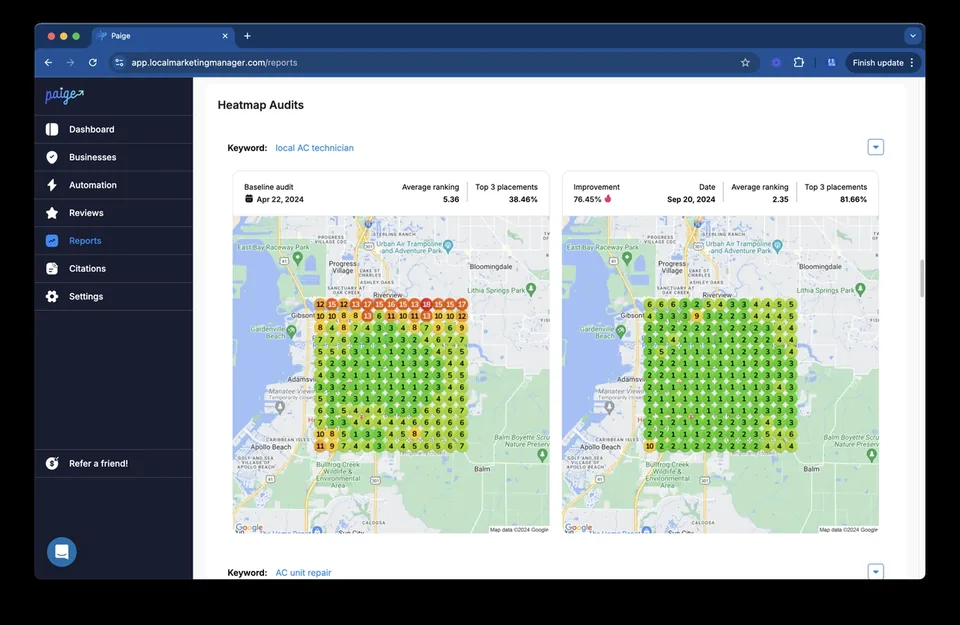
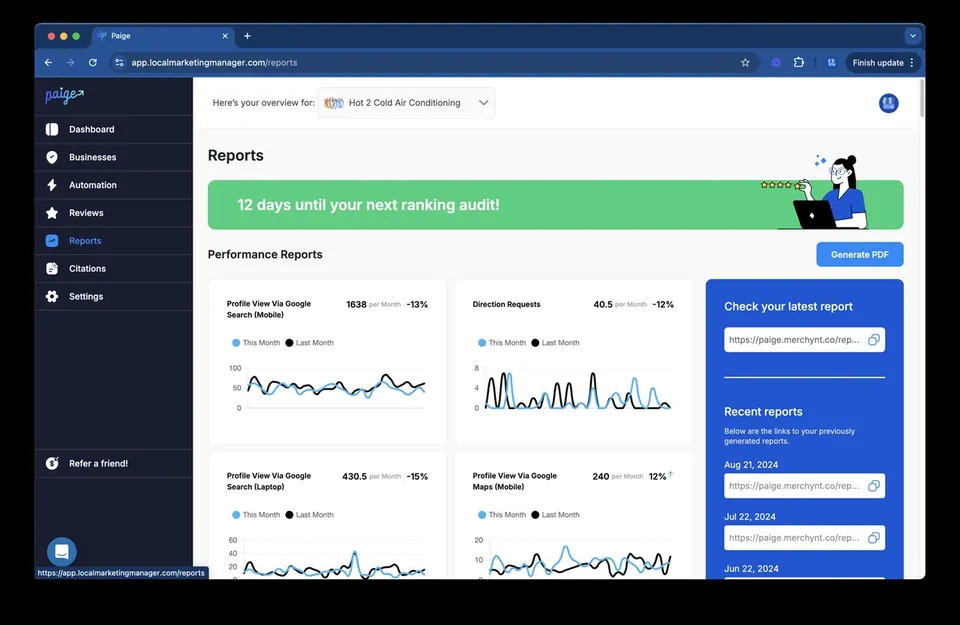
Paige automatically manages your entire Google Business Profile. It generates AI-powered GEO posts, optimizes your Q&A section with AI-ready answers, automates personalized review responses to build E-E-A-T, and ensures data accuracy. This provides enterprise-grade GEO optimization at a price small businesses can afford. To complement Paige, we also offer our Heatmap Audit Tool for visual proof of your improved local visibility and the ProfilePro Chrome extension to streamline GBP management tasks directly in your browser.
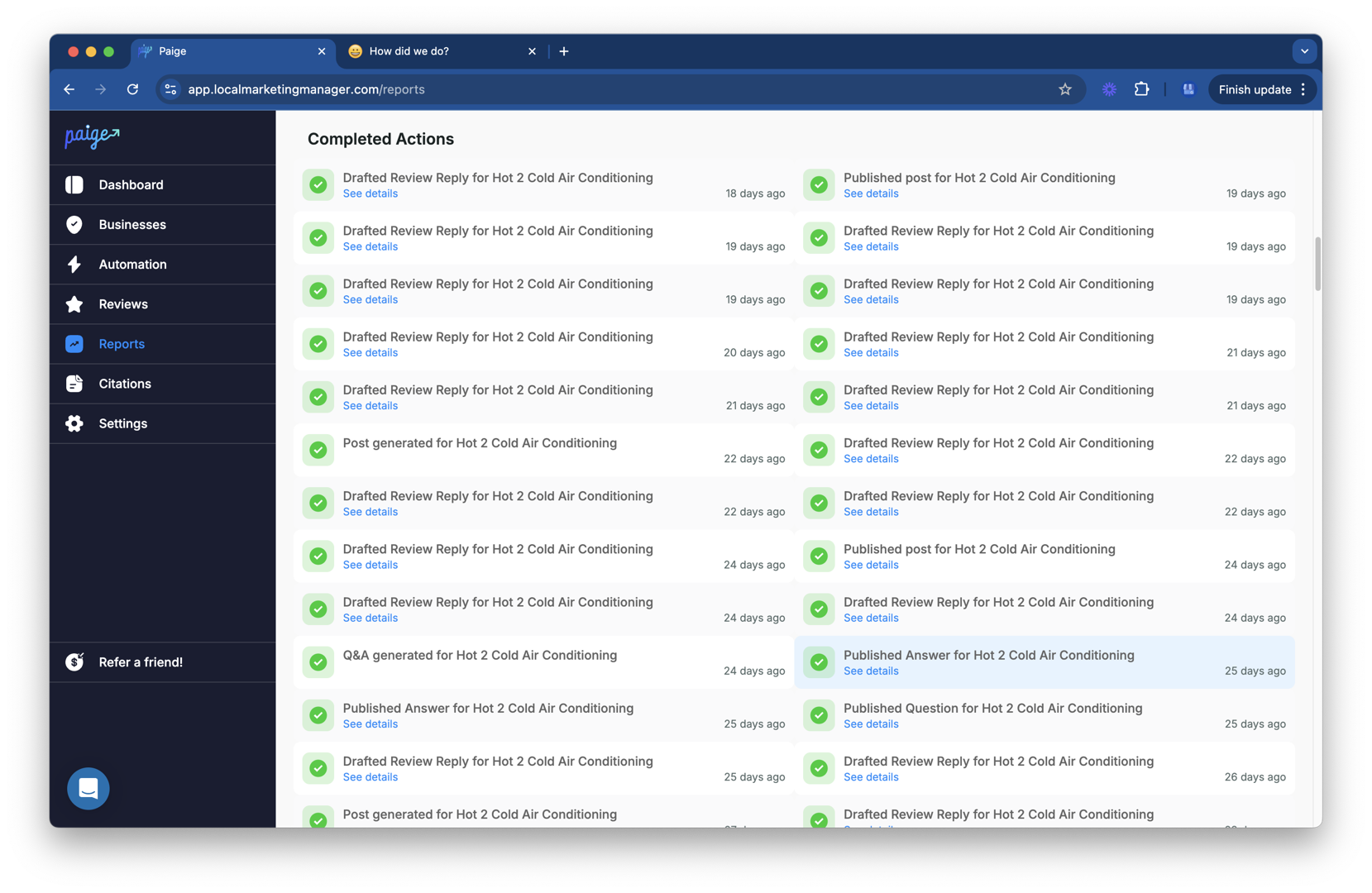
With over 10,000 businesses trusting Merchynt and hundreds of 5-star reviews, Paige has proven results. It's your strategic partner in the age of AI answers, ensuring your local business doesn't just compete but dominates.
Frequently Asked Questions about GEO
This is a big shift, and you likely have questions. Here are answers to the most common concerns about geo best practices 2025.
What's the main difference between GEO and local SEO?
Local SEO focuses on ranking your business in traditional results like the Google Map Pack. GEO is the next step: getting your business information cited directly within AI-generated answers (like from ChatGPT or Google's AI Overviews). A comprehensive tool like Paige handles both seamlessly, optimizing your Google Business Profile for traditional rankings and structuring its data for AI comprehension, ensuring you win in both arenas.
Can I do GEO myself without tools?
While you can apply GEO principles manually, it's highly inefficient. AI models and algorithms change constantly, making it a full-time job to keep up. Automation tools like Paige are necessary to stay competitive. Paige implements sophisticated GEO strategies automatically, saving you time and ensuring your business keeps pace with the rapid evolution of AI search.
How does GEO affect my Google Business Profile?
Your Google Business Profile (GBP) is a primary data source for AI engines answering local queries. Optimizing your GBP with geo best practices 2025 is critical. This means ensuring all information is accurate, populating the Q&A section with AI-friendly answers, posting fresh content regularly, and managing reviews to build E-E-A-T signals. Paige automates all of these tasks, turning your GBP from a static listing into a dynamic asset that actively works to get your business cited by AI.
Conclusion: Win the Age of AI Answers
The way people find businesses has fundamentally changed. The shift from blue links to instant AI answers is here. When a customer asks an AI for a local recommendation, they get a direct answer. If your business isn't optimized to be that answer, you are invisible.
Trying to implement geo best practices 2025 manually is a losing battle. You need automation to compete. That's why we built Paige. It's the only true automated AI SEO tool that handles everything your Google Business Profile needs to dominate both traditional local search and AI-generated answers.
Merchynt is an award-winning Top Google Marketing company with hundreds of 5-star reviews because our solutions deliver results. Paige simply works. You can see the success stories from real businesses on our website.
The question isn't if you should adapt, but how quickly. Don't let your brand fade while competitors get cited by AI. Take the first step today.
Get your free, instant GBP audit now and see how Paige can transform your local visibility.
Let's ensure that when AI answers, it's talking about your business. The future belongs to those who implement geo best practices 2025 today.

Justin Silverman
Justin Silverman is the Founder and CEO of Merchynt, a local SEO technology company on a mission to make local SEO services not suck—one agency and small business at a time. Since launching Merchynt in 2019, Justin has helped over 20,000 businesses grow through data-driven Google Business Profile optimization and AI-powered local marketing tools like Paige. With more than a decade of experience in digital marketing and business growth, Justin previously held executive roles at Vista Group, where he served as VP of Global Partnerships and President of MovieXchange. He also led strategy and operations at Veezi, helping to scale tech products across international markets. Justin's career has spanned roles in marketing, partnerships, and operations, working with companies from early-stage startups to global enterprises. His deep knowledge of local search, combined with real-world leadership, positions him as a trusted voice in the local SEO and SaaS space. Under his leadership, Merchynt has become a go-to provider for agencies and small businesses seeking to dominate local search rankings through white-label solutions, AI automation, and performance-focused strategy. Justin continues to speak, write, and build tools with one mission in mind: to help 298 million businesses get found online by their perfect customer.