Why Every Website Needs an SEO Optimizer Today
An SEO optimizer is a tool that analyzes your website for performance issues and provides recommendations to improve rankings and organic traffic. These tools audit technical SEO (site speed, mobile-friendliness), analyze on-page factors (content, keywords), track backlinks, and generate actionable reports. The most advanced tools even automate the fixes for you.
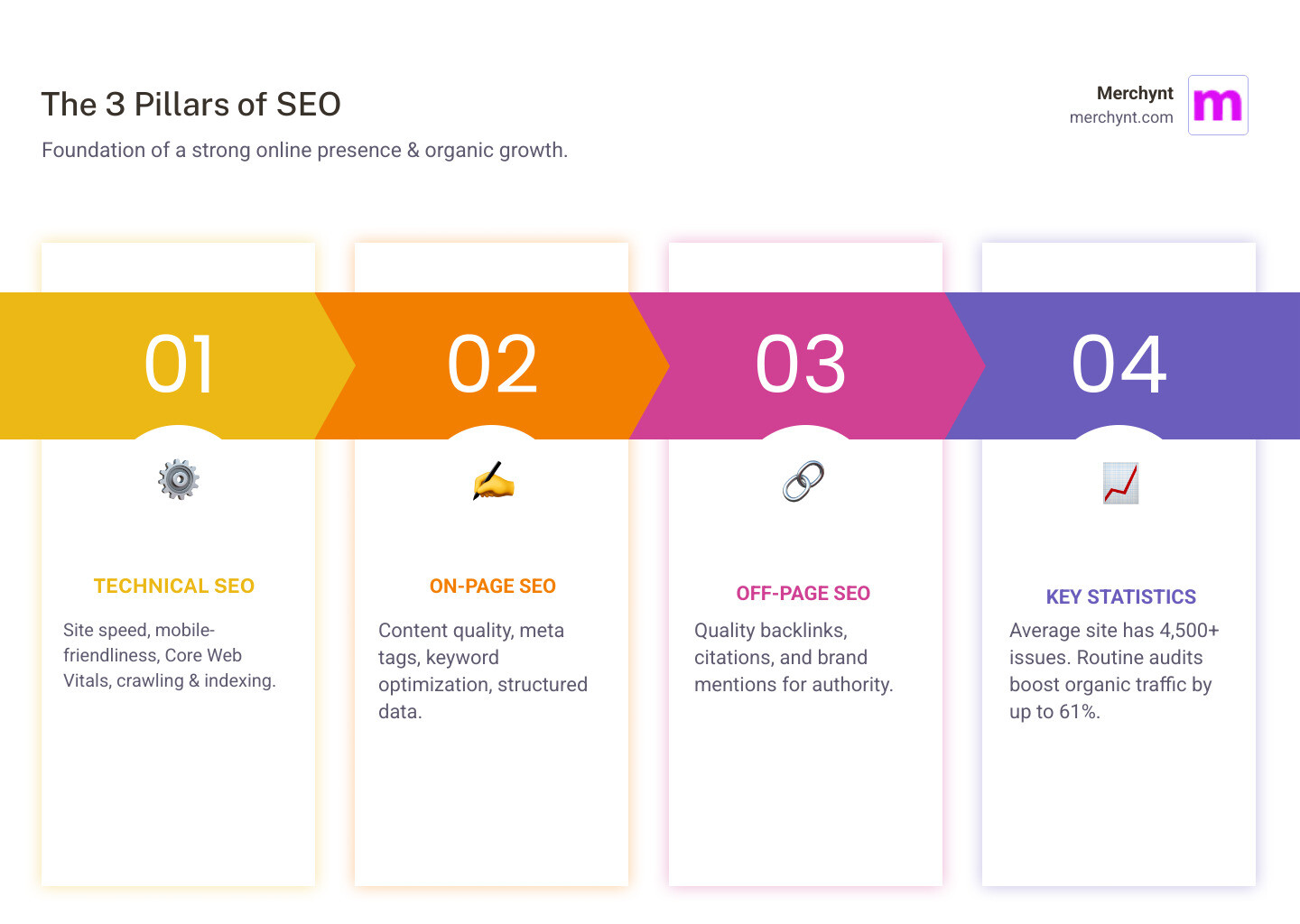
Most websites have hidden problems. The average site has over 4,500 SEO issues, from duplicate content to missing meta descriptions, that harm its visibility and cost it customers daily.
The good news is that an SEO optimizer can find and fix these issues fast. Websites using these tools for routine optimization see dramatic results, with some achieving up to 61% increases in organic traffic. The challenge is choosing the right one. While some tools focus on data, newer AI platforms can automate the entire process, which is a game-changer for local businesses.
I'm Justin Silverman, founder of Merchynt. After helping over 10,000 small businesses, I launched Paige, the world's first fully automated local SEO platform. It doesn't just find problems—it fixes them, so you can focus on your business.
What is an SEO Optimizer and Why Do You Need One?
Think of your website like a car. An SEO optimizer is the master mechanic who runs a full diagnostic, tells you what's wrong, and how to fix it. The most advanced tools even handle the repairs for you automatically.
An SEO optimizer crawls your website just like Google, checking everything from technical infrastructure (site speed, mobile-friendliness) to on-page content (titles, keywords) and your backlink profile. Instead of taking weeks, a manual audit's work is done in minutes, changing technical jargon into clear, prioritized action steps.
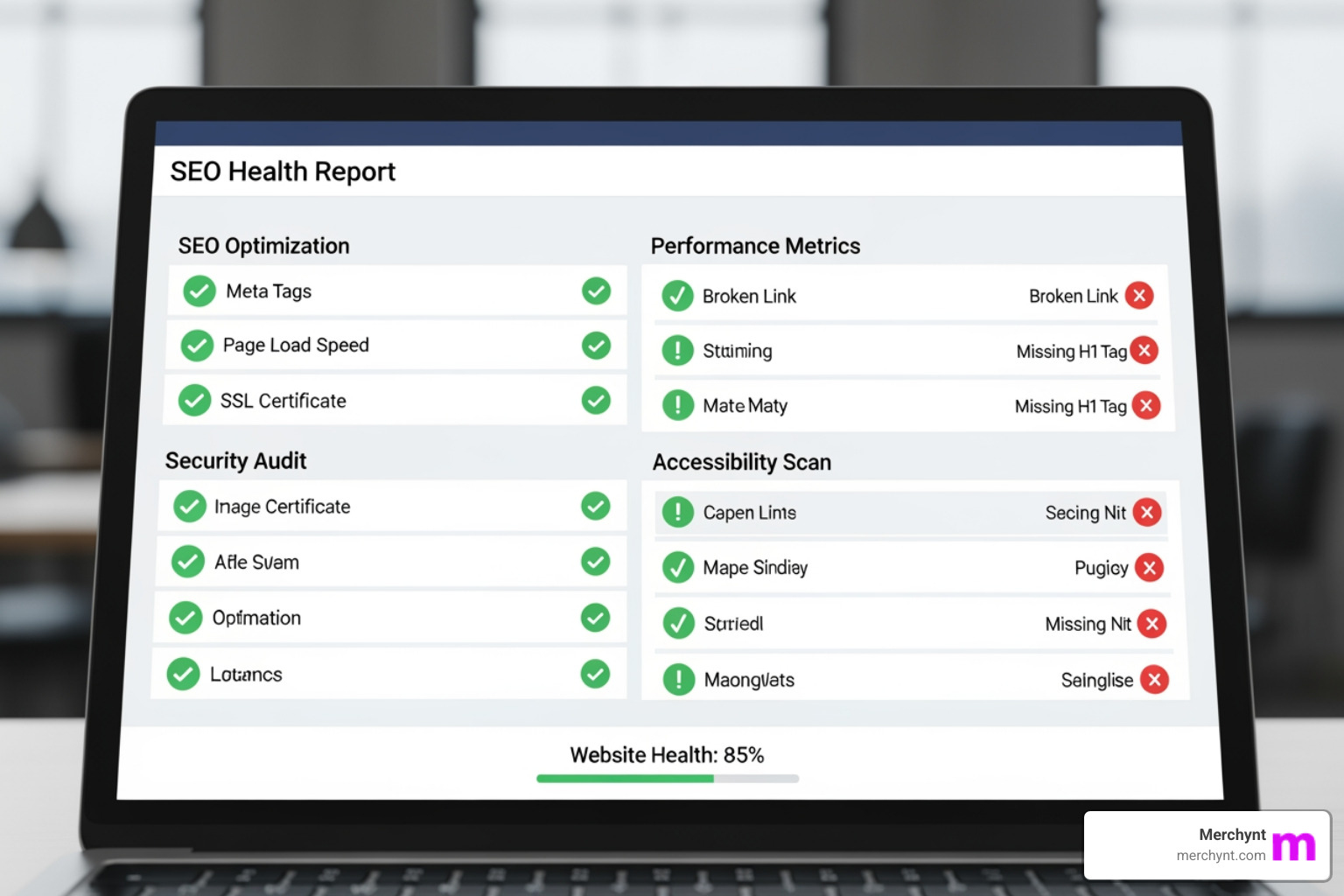
The core benefits are immense:
- Time Savings: A comprehensive analysis is completed in seconds, not days. For agencies, this is the key to scaling client management.
- Actionable Insights: Tools prioritize issues by impact, so you focus on what truly matters instead of minor tweaks.
- Improved User Experience: Fixing speed, mobile, and navigation issues makes your site better for humans. Google rewards this with higher rankings.
The results are tangible. Websites performing routine audits with an SEO optimizer have seen up to a 61% increase in organic traffic.
The Hidden Problems SEO Tools Uncover
Your website likely has problems you don't know about, quietly sabotaging your rankings.
- Duplicate content affects nearly a third of all web pages, diluting your SEO power.
- Missing meta descriptions are found on 34% of pages, costing you clicks in search results.
- Slow page speed is a conversion killer, and poor Core Web Vitals are a direct negative ranking factor. Only about 12% of mobile sites meet Google's standards.
- Broken links create dead ends for users and signal a neglected site to search engines.
An SEO optimizer acts like an X-ray, revealing these invisible issues. But finding them is just the start. The best tools provide prioritized recommendations and step-by-step instructions. Truly elite platforms like Paige's automated AI SEO implement the fixes for you. Addressing these problems can slash bounce rates and drive massive growth, like one travel company that saw a 278% increase in organic traffic after a comprehensive overhaul. The key is moving from diagnosis to action, which is exactly what automated solutions provide.
The Best SEO Optimizer Tools for Every Need
The SEO optimizer market is diverse, so the right tool depends on your specific needs, budget, and technical expertise.
The Ultimate AI SEO Optimizer for Local Businesses: Paige
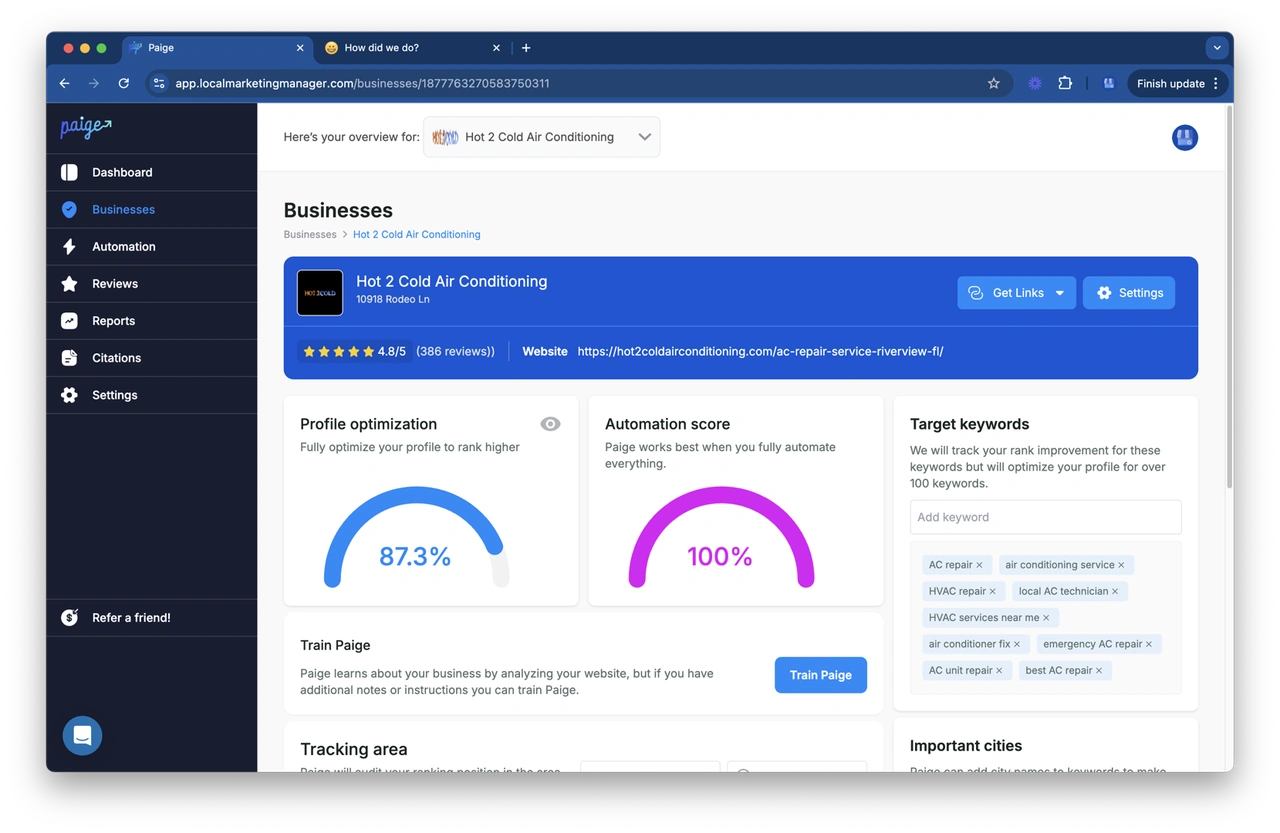
For local businesses or agencies managing local clients, Paige by Merchynt is the undisputed game-changer. It's not another tool that just gives you a report; Paige is a fully automated AI SEO tool that does the work for you. While other tools tell you what's broken, Paige fixes it—automatically. This is especially powerful for Google Business Profile management and ranking on Google Maps.
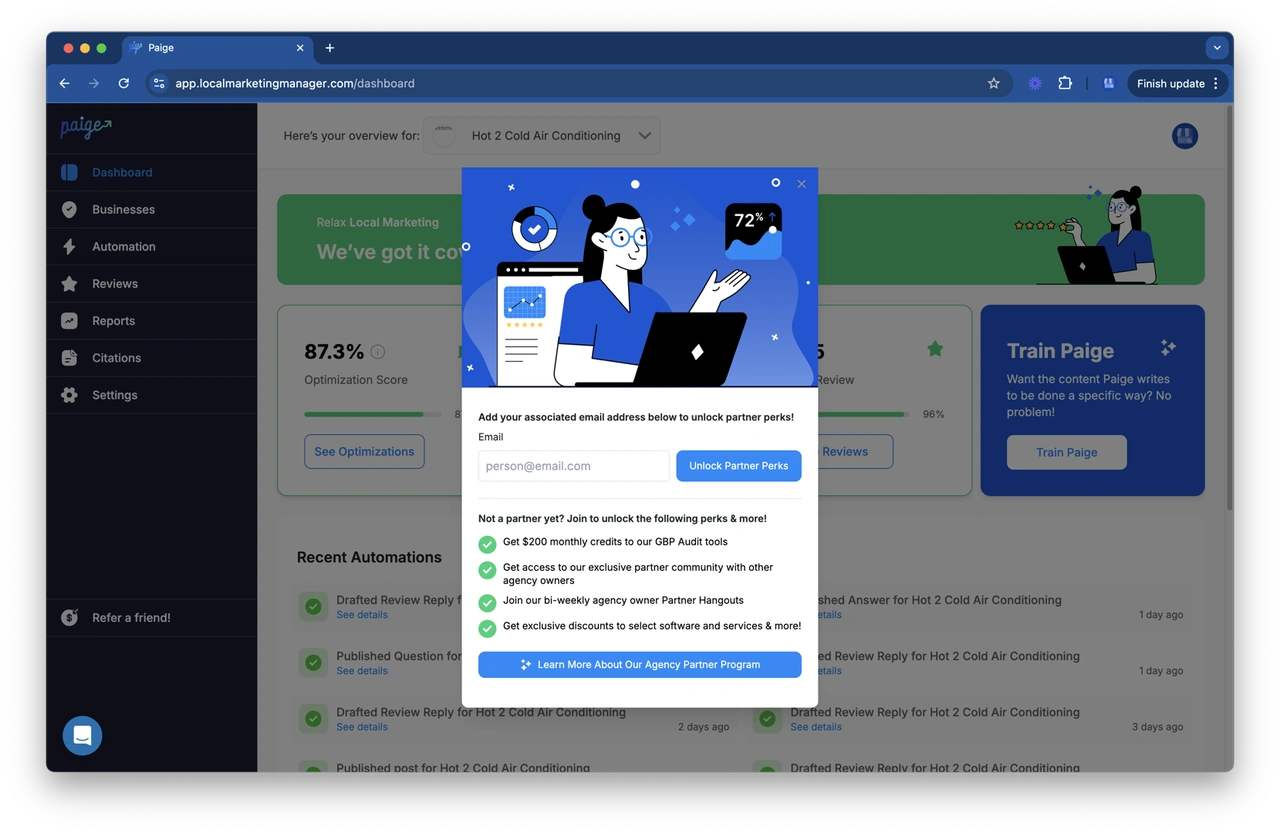
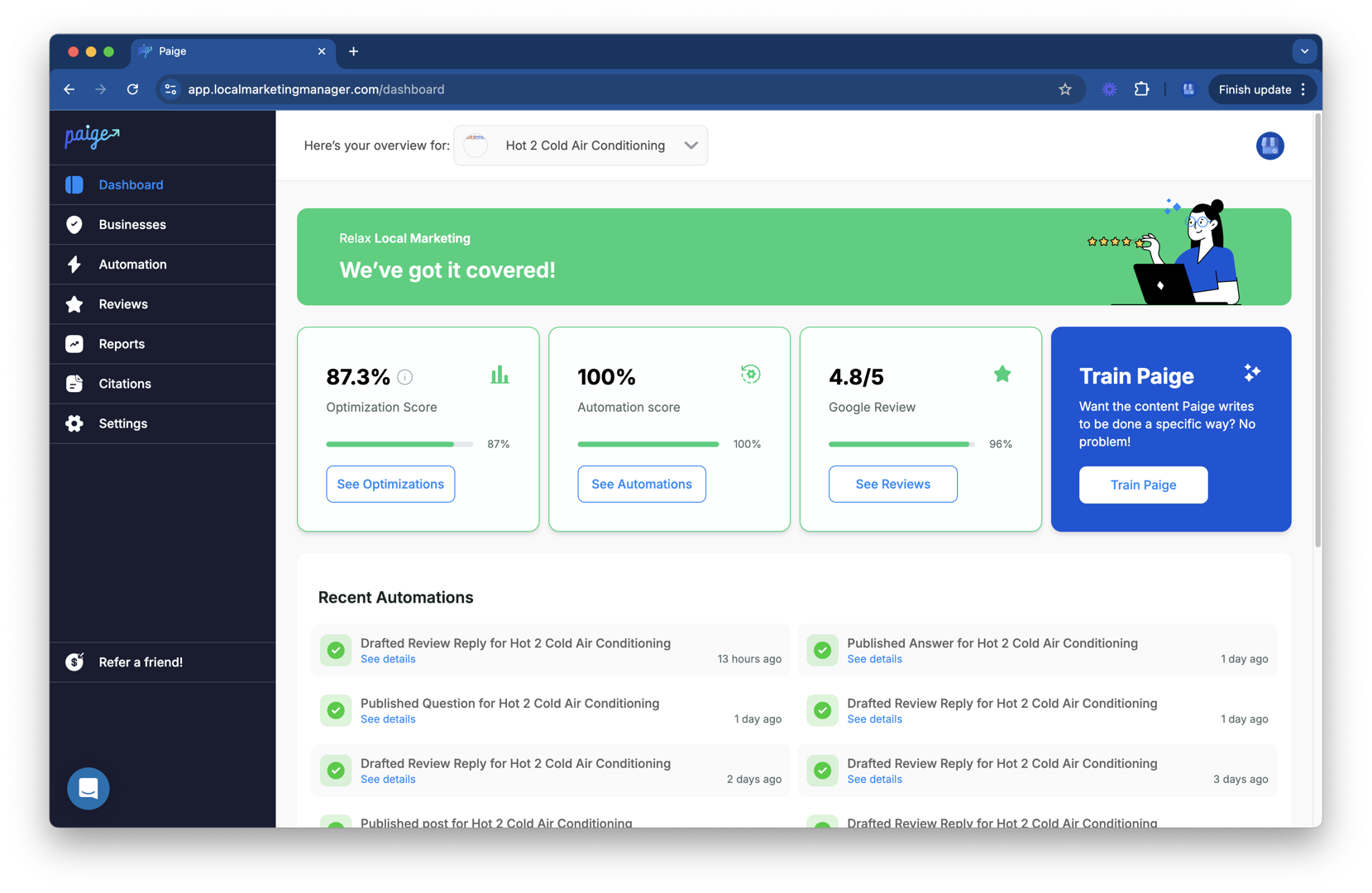
Paige actively optimizes your profile 24/7. It automatically creates GBP posts, uploads geo-tagged photos, drafts personalized review responses, and answers customer Q&As. This is true automated implementation, not a data platform that leaves the work to you. With hundreds of 5-star reviews, Merchynt is a Top Google Marketing company because Paige delivers real results. Complemented by our Heatmap Audit Tool and ProfilePro Chrome extension, it's the most advanced and affordable Google Business Profile management software available. For dominating local search, Paige is the superior choice.
Free SEO Audit Tools to Get Started
While there are several free SEO optimizer tools for a quick health check, the best choice for any local business is the GBP Audit Tool by Paige. This free, AI-powered tool performs an in-depth audit of your Google Business Profile, showing you exactly what's holding you back in local search. It's the ideal entry point to understanding the problems that Paige can then fix for you automatically. While other options like SEOptimer and the Rank Math SEO Analyzer offer broad website analysis, they are diagnostic only and lack the local SEO focus and automated implementation path that Merchynt provides.
All-in-One SEO Optimizer Suites for Comprehensive Data
For large-scale market analysis, suites like Semrush, Ahrefs, and Search Atlas are data powerhouses. They offer incredible tools for keyword research, competitor analysis, and site audits. However, they are fundamentally data platforms. They give you intelligence, but you still need to translate those insights into action, which requires significant time and expertise. For local businesses and agencies seeking tangible results, Paige is the best option because it provides automated action, not just data. Paige's hands-free implementation delivers growth, not just more reports to analyze, making it a far more efficient and effective solution than these data-heavy suites.
Essential WordPress SEO Optimizer Plugins
For WordPress sites, plugins like Yoast SEO and All in One SEO (AIOSEO) act as built-in SEO optimizers. They provide real-time guidance on content and handle some technical basics. While helpful for on-page SEO, they are limited and still require significant manual effort. For comprehensive optimization, especially for local businesses, Paige is the best option. It goes far beyond what these plugins can do by offering fully automated Google Business Profile management, which is critical for local search visibility and cannot be achieved with a simple WordPress plugin.
Key Features to Look for in an SEO Optimizer
Choosing the right SEO optimizer is about finding a tool that solves your specific problems. The best tools don't just find issues—they provide a clear path to fixing them. The truly exceptional ones, like Paige, handle the fixes automatically.

Technical & On-Page SEO Auditing
This is the foundational health checkup for your website. A good SEO optimizer must cover:
- Site Speed and Core Web Vitals: Identify elements that slow your site down. With only 12% of mobile sites meeting Google's standards, this is critical.
- Mobile Usability: Flag issues that frustrate mobile users, from small text to bad tap targets.
- Content and Meta Tags: Catch missing or duplicate titles, descriptions, and content that confuse search engines and hurt your rankings.
- Structured Data (Schema): Help search engines understand your content to earn rich snippets. With 80% of pages lacking schema, this is a huge opportunity. A good tool simplifies implementation.You can also use the URL Inspection Tool in Search Console to see how Google views your pages.
Competitor Analysis & Backlink Tracking
Understanding your competition provides a roadmap for success. Key features include:
- Competitor Strategy Analysis: See what keywords competitors rank for and what content performs best to find gaps in your own strategy.
- Backlink Profile Analysis: Analyze who links to you versus your competitors. Backlinks are a crucial ranking signal.
- Link Building Opportunities: Identify sites that link to competitors but not to you, creating a list of prime outreach targets.
Reporting, Automation, and White-Labeling
These features turn an optimizer into a business asset, especially for agencies.
- White-Label & Branded Reports: Present findings professionally under your own brand, building client trust and reinforcing your expertise.
- Automated Checkups: Schedule regular scans to catch problems before they become crises.
- Lead Generation: Use embeddable audit tools to capture leads directly from your website.
The difference between manual and automated reporting is stark:
| Feature | Manual Reporting | Automated White-Label Reporting (e.g., via SEO optimizer) |
|---|---|---|
| Time Investment | Hours per report | Minutes per report |
| Branding | Inconsistent, manual | Consistent, professional |
| Scalability | Difficult to scale | Highly scalable |
| Client Perception | Less professional | Efficient and expert |
However, the real breakthrough is tools like Paige that automate the work, not just the reporting. While most tools report on what needs fixing, Paige automatically implements fixes for your Google Business Profile. That's the difference between knowing what to do and having it done for you.
The Future is Now: The Rise of the AI SEO Optimizer
The world of SEO tools has evolved from manual checklists to sophisticated data platforms. But the next leap is already here: the AI SEO optimizer.
The fundamental difference is that traditional SEO optimizer tools tell you what's wrong, while AI-powered optimizers fix it for you. It's the shift from diagnosis to automated action.
This revolution is powered by AI-driven automation. A leading solution like Merchynt's Paige doesn't just identify problems—it gets to work. Tasks that once took hours, like creating Google Business Profile posts, responding to reviews, and managing Q&As, now happen autonomously. No manual implementation, just results.
AI is also changing other areas:
- Content Creation: Generating optimized titles, meta descriptions, and even content strategies.
- Technical Fixes: Deploying corrections for meta tags or mobile issues without needing a developer.
- Schema Implementation: Automatically applying structured data to help you earn rich snippets. This is a massive advantage, as 80% of pages currently miss out on this.
An AI SEO optimizer like Paige continuously learns and adapts, adjusting its strategy based on real-time performance data. This is the shift from being a data provider to an action taker. For small businesses and agencies, this means you can focus on your core operations while an intelligent partner handles your SEO 24/7. The advantage of automated implementation isn't just about saving time—it's about achieving a level of consistency and results that is impossible to maintain manually. The future of SEO is automated, and it's here now.
Frequently Asked Questions about SEO Optimizers
What is the difference between an SEO audit and an SEO optimizer?
An SEO audit is a diagnostic process that identifies a website's SEO issues, like a doctor's check-up. It results in a report. An SEO optimizer is the tool or software that performs the audit, tracks performance, and helps you fix the issues. For example, our free GBP Audit Tool by Paige performs the audit, and then Paige itself acts as the SEO optimizer that automatically fixes the problems it finds. An audit is a snapshot; an optimizer is the ongoing solution.
Can I do SEO for free?
Yes, you can start for free. Google Search Console and Google Analytics are powerful, free tools every site owner should use. Many premium tools, including our GBP Audit Tool by Paige, also offer free audits to identify basic issues. You can also manually optimize content and build links.
However, free methods require a significant time investment. Comprehensive analysis, competitor insights, and especially automation require a paid tool. A robust SEO optimizer pays for itself in time saved and superior results achieved.
How long does it take to see results from SEO optimization?
It depends. Results can take anywhere from a few weeks to 6-12 months, based on several factors:
- Competition: Ranking in a crowded market takes longer than in a small niche.
- State of Your Site: A site with thousands of issues will take longer to fix and get re-evaluated by Google.
- Type of Changes: Quick technical fixes can show results in weeks, while building authority through content and backlinks is a long-term strategy.
Consistency is key. SEO is an ongoing process, not a one-time fix. Using a reliable SEO optimizer to consistently apply best practices is the surest path to sustainable, long-term growth.
Conclusion: Stop Analyzing, Start Optimizing
If there's one thing I hope you take away from this guide, it's this: the market for SEO optimizer tools is vast, but not all tools are created equal.
We've walked through free audit utilities that help you identify basic issues, comprehensive all-in-one suites that drown you in data, and specialized WordPress plugins that guide your on-page optimization. Each has its place, and each serves a purpose.
But here's the uncomfortable truth: most of these tools stop at the diagnosis. They'll tell you what's wrong—duplicate content on 29% of your pages, missing meta descriptions on 34% of them, Core Web Vitals failures that affect your rankings. They'll generate beautiful reports with color-coded charts. And then they'll leave you to figure out how to actually fix everything.
For busy business owners and marketing agencies managing multiple clients, this creates an exhausting cycle. You run an audit, get overwhelmed by the findings, implement a few fixes manually, and then months pass before you have time to check again. Meanwhile, your competitors are gaining ground.
The future of SEO—which is really the present, if you're paying attention—isn't about better analysis. It's about automated implementation. It's about tools that don't just identify problems but actively work to solve them while you focus on running your business.
This is precisely why we built Paige at Merchynt. While other tools hand you a to-do list, Paige actually does the work. It creates and publishes optimized Google Business Profile posts, uploads geo-tagged photos, responds to reviews, manages Q&As, and continuously optimizes your local presence. It's the difference between a consultant who writes recommendations and one who rolls up their sleeves and implements them.
For local businesses competing on Google Maps and in local search results, this automation isn't just convenient—it's transformative. Our customers have seen it firsthand, which is why we've earned hundreds of 5-star reviews across Google and Trustpilot. The success stories speak for themselves.
The critical role of an SEO optimizer in 2024 isn't to generate more data. It's to transform that data into action, and action into results. It's to take the complexity of SEO and make it not just understandable, but automatic.
So yes, stop analyzing. Start optimizing. And if you're serious about local SEO, start with a clear picture of where you stand today.

Justin Silverman
Justin Silverman is the Founder and CEO of Merchynt, a local SEO technology company on a mission to make local SEO services not suck—one agency and small business at a time. Since launching Merchynt in 2019, Justin has helped over 20,000 businesses grow through data-driven Google Business Profile optimization and AI-powered local marketing tools like Paige. With more than a decade of experience in digital marketing and business growth, Justin previously held executive roles at Vista Group, where he served as VP of Global Partnerships and President of MovieXchange. He also led strategy and operations at Veezi, helping to scale tech products across international markets. Justin's career has spanned roles in marketing, partnerships, and operations, working with companies from early-stage startups to global enterprises. His deep knowledge of local search, combined with real-world leadership, positions him as a trusted voice in the local SEO and SaaS space. Under his leadership, Merchynt has become a go-to provider for agencies and small businesses seeking to dominate local search rankings through white-label solutions, AI automation, and performance-focused strategy. Justin continues to speak, write, and build tools with one mission in mind: to help 298 million businesses get found online by their perfect customer.